In 2021 the website of HAN University of Applied Sciences moved to a new brand style. It went fast, too fast to check whether every page matched the new tone of voice. That left us with this:
- 20,000+ web pageshundreds of them never reviewed after the move
- One editorresponsible for the brand voice across the whole site
- 80+ editorswriting new content every day
Why one editor couldn't keep up
The brand voice depended on one person's capacity. She had to find pages by hand and read each one, and a single text took 15 to 20 minutes to read, assess and rewrite. Meanwhile the other editors kept writing, and their texts were only corrected after the fact.
What it delivered
Tone Tara is a custom GPT: a chatbot in ChatGPT that works with our own tone of voice knowledge. She checks a text against the brand voice and rewrites it. Editors paste their text and get it back in the right tone. She's been used thousands of times by more than 80 editors, and the editor who used to check every page now manages Tara.
- A priority listAll 20,000 pages scored from 0 to 10 in one run, so the editor knew where to start.
- Self-serviceEvery editor checks their own text, without waiting for a review.
- One word list879 outdated words, each with the word we prefer.
See it work
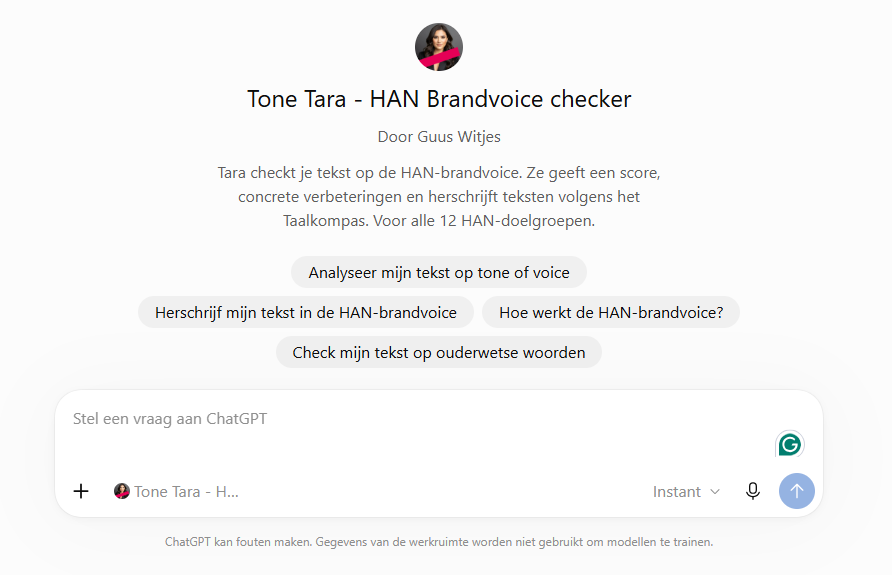
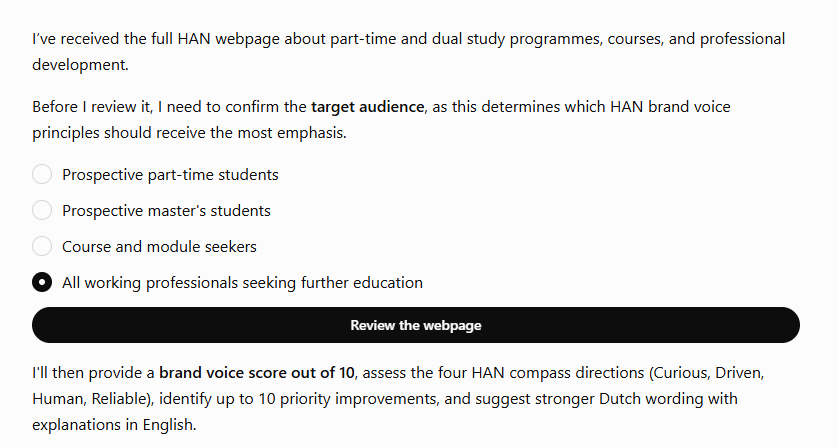
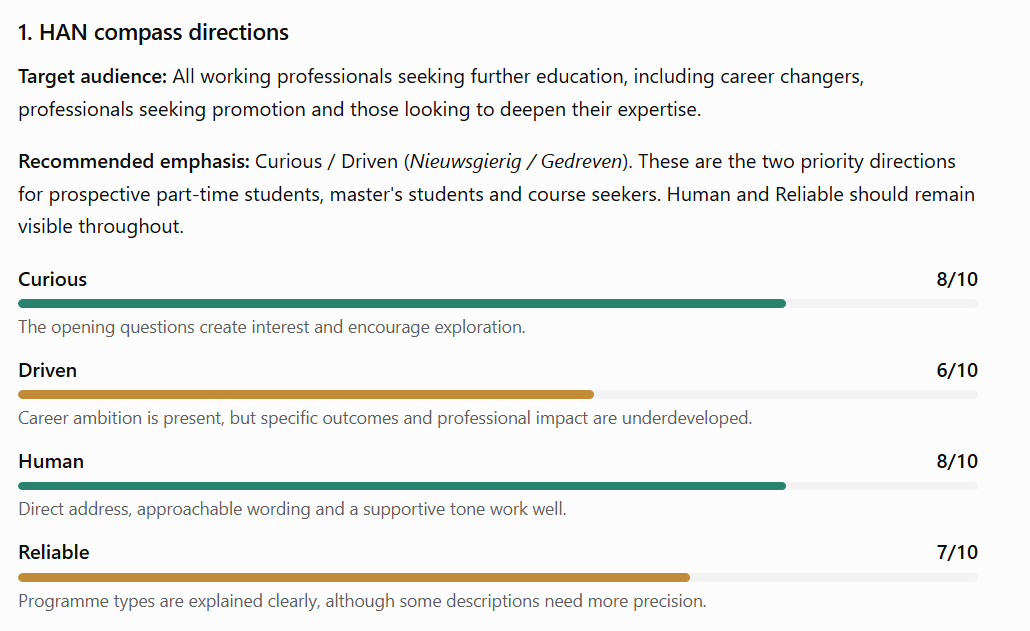
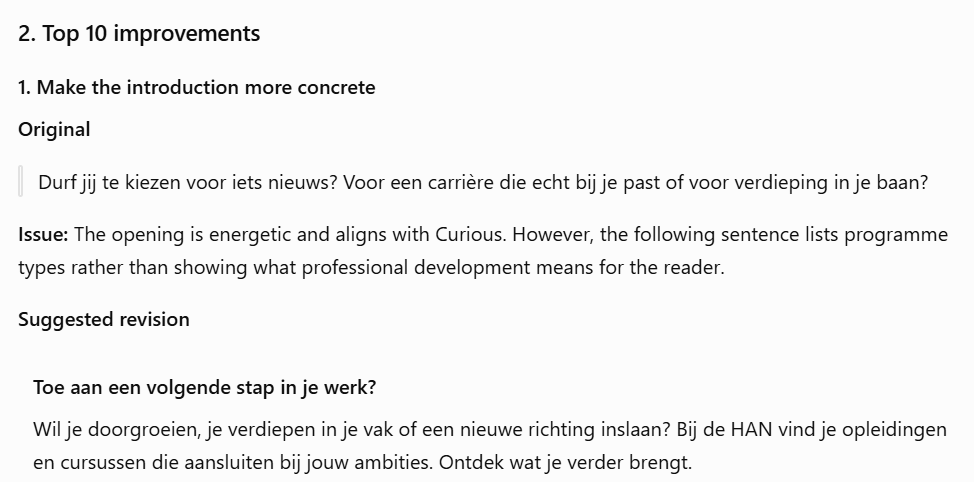
How Tara works
- Paste your text. A web page, a news item, anything you wrote.
- Say who it's for. Tara asks. She knows 12 audience types, each with its own accent on the brand voice.
- Tara scores it. An overall score out of 10 and one for each of the four directions of the brand voice: curious, driven, human and reliable. Plus specific suggestions for what to change.
- She rewrites it. In the right tone for that audience, with the word list applied.
- You review it. Paste, review, done.
How we built it
It started with a question: could we score all 20,000 pages automatically? I wrote a prompt that compared each page with our tone of voice guidelines and gave it a score from 0 (poor) to 10 (perfect) in a Google Sheet. Months of reading became a priority list.
That helped one editor, and it did nothing for the 80 others. So she and I turned the prompt into a chatbot, together. She brought the examples and judged the quality. I worked out how to teach it to the AI.
The first version was mediocre. It took five versions, over several months.
- The guidelines as a PDF. Tara followed the rules loosely, like a new hire who read the manual once.
- The same guidelines as a structured text file. More precise output.
- Good examples. Tara now had a reference for what right looks like.
- Bad examples with the editor's rewrites. The biggest jump in quality: Tara could see the gap between wrong and right, and how to close it.
- A word list. The words we don't use, each paired with the word we prefer.
The AI platform stayed the same through all five. Every improvement came from better knowledge. We're now rebuilding Tara so she also works with other AI models, next to ChatGPT. Tara follows the five steps of my BUILD framework.
Three choices made the difference.
- Built with the expertThe editor was a co-builder. She knew what good brand voice looks like.
- Live earlyWe went live before Tara was perfect and asked editors where she got it wrong.
- Part of the trainingEditors tried Tara in the existing tone of voice training and gave feedback on the spot.
What stays with people
Tara checks the tone. Every editor still reviews what comes back. What good brand voice looks like came from the responsible editor, and she manages Tara now: seven knowledge files, kept up to date, with the feedback from editors going back in.
Which check in your team still depends on one person's time?
← See all examples